Home / Longevity & Movement / Guides
Strength training basics: the quiet half of staying capable
Cardio gets all the attention, but muscle is the insurance policy for your sixties and seventies. The WHO's guideline is blunt about it: muscle strengthening benefits everyone, at least twice a week.
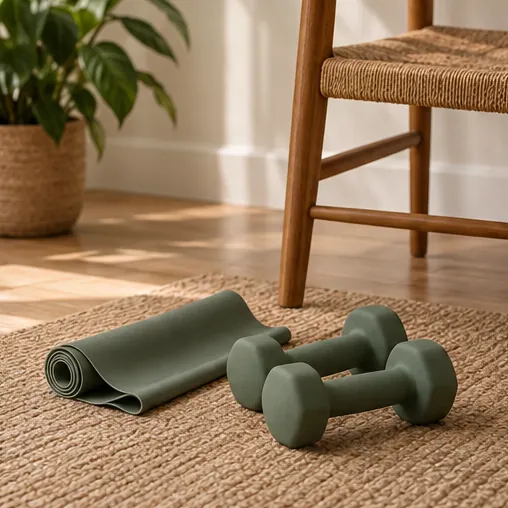
Why strength is the quiet half
Walking keeps your engine running. Strength keeps the chassis intact: carrying groceries, climbing stairs, getting up off the floor, catching yourself when you trip. The WHO lists muscle strengthening work at least two days a week alongside its famous 150 minutes, and notes the benefits apply to everyone, not just athletes.
What counts
Anything that makes your muscles work against resistance: squats to a chair, wall or countertop pushups, carrying heavy bags, a resistance band, dumbbells, machines. Bodyweight fully counts. You do not need a gym membership to meet the guideline.
The beginner progression that actually works
Pick three moves: a squat pattern, a push pattern, a carry. Two days a week, two sets each, a weight or variation that feels like honest work by rep eight. When two sets feel easy, make the move slightly harder. That is the entire program, and it is the one people keep.
Soreness, safety and seniors
Mild soreness the next day is normal when you start. Sharp pain is not. If you are over 60, have a condition, or have not trained in years, a session or two with a physiotherapist or qualified trainer is money better spent than any supplement on this site.
Sources
- World Health Organization: Physical Activity fact sheet (muscle strengthening guideline and benefits, checked November 16, 2026)
Keep reading
Back to the Longevity & Movement hub · Before you buy a probiotic · How we review products