Home / Gut & Skin / Guides
Fermented foods: the cheapest way to feed your gut
The probiotic aisle wants you to believe gut health comes in a capsule. The cheapest, oldest source of live cultures is the grocery store, and you probably already walk past it every week.
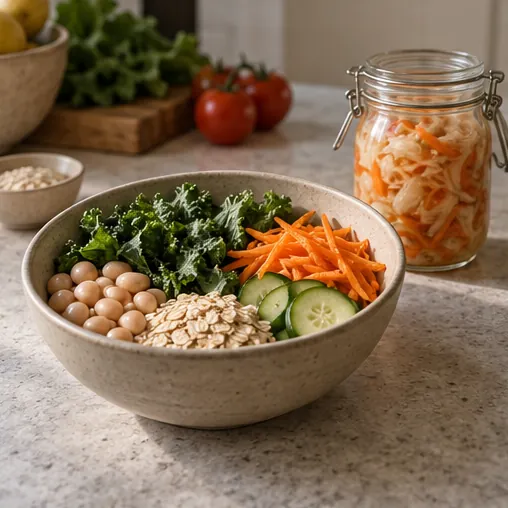
What fermented foods actually are
Fermented foods are foods transformed by live microorganisms. Yogurt, kefir, kimchi, sauerkraut and some pickles are made this way. As the NCCIH explains, these foods naturally contain live microorganisms, and many of them are the same as or similar to the ones that already live in your body.
Why food first
Three reasons. First, cost: a tub of yogurt or a jar of sauerkraut costs a few dollars, not thirty a month. Second, you get the cultures inside real food, with protein, calcium or fiber along for the ride. Third, there is no label fine print to decode, because food does not promise you a strain count at expiry.
What to look for at the store
Two quick checks. On yogurt, look for the words "live and active cultures" on the label. On sauerkraut and pickles, look in the refrigerated section and check that vinegar is not doing all the work: shelf stable jars pickled in vinegar are not fermented and carry no live cultures.
How to start
Add one serving a day of one food you actually like. A bowl of yogurt at breakfast or a forkful of kimchi next to dinner. Do that for a few weeks before you even think about a supplement. Most people never need to go further.
When a supplement might enter the picture
Supplements make sense when you have a specific reason and a strain to match it, which is exactly what our probiotic buying guide walks through. Keep in mind what the NCCIH notes about regulation: most probiotic supplements are sold as dietary supplements, which do not require FDA approval before they are marketed. Food first, supplement only with a reason.
Sources
- NCCIH: Probiotics: What You Need To Know (what probiotics are, fermented foods, supplement regulation, checked November 16, 2026)
Keep reading
Back to the Gut & Skin hub · Before you buy a probiotic · How we review products